My first weeks of widowhood

Brian was 14 years older than me and had a history of heart disease, so we knew it was likely that he would die first. I tried to prepare myself for the event but it was impossible to predict when and how it would happen, or how I would feel afterwards. Much has been written about coping with spousal bereavement but everyone is different and there is no right way to respond to this monumental life experience.

There have been many practical and administrative matters to deal with during these first few weeks. I have had wonderful support from family, friends and former colleagues, being showered with flowers and food and invitations to meals, cards and letters expressing condolences for me and appreciation for Brian. Although my grief is profound I have not been overwhelmed by it, but have managed everything efficiently and kept in good health. Christmas preparations and festivities are underway too, so I have been very busy. I don’t know whether that is a good thing. I’m afraid that after Christmas, when all the activity and attention has wound down, the loneliness and boredom of being without Brian is really going to sink in.

Brian and I had a wonderful life together until the last few months when the nature of his illness prevented any meaningful conversation between us, and made it unsafe for him to be nursed at home where he longed to be. He had very good care in the hospital, and I did all I could to support him there, but his distress could not be relieved and he wanted to die. Thankfully his last 24 hours were peaceful.

I have a few regrets. I wish that when he was still well we had talked more about planning the future, done some decluttering and possibly downsized. And, although it is comforting to look through all my photos of Brian, I wish I had taken more videos of him.

2024

The year 2024 has brought mixed fortunes for me and husband Brian, with both pleasures and challenges. I’ve written this summary mainly for myself, but if you are interested please read on. Most of the topics mentioned have been covered in more detail in previous posts on this blog.

The first few months of 2024 were dominated by Brian’s medical issues. His artificial heart valve, inserted nine years ago, was failing and after a series of invasive tests he underwent a TAVI (trans aortic valve insertion) with a device similar to that pictured below.. The operation itself went well but was followed by two episodes of haemorrhage from the bowel, requiring emergency hospitalisations and multiple blood transfusions. Thankfully he has now recovered and, at the age of 91, is well and active. Modern cardiac surgery can achieve wonderful results.

After twenty-odd years as a member of the choir of St Patrick’s Cathedral, at Easter I made the difficult decision to resign. I loved singing in this setting, but the combination of Brian’s medical problems and the unreliability of the ferry service to central Auckland was preventing regular attendance. Also, since a few other long serving members had left, I realised I was 50 years older than almost everyone else! I have now joined a larger choir, Harbour Voices, which is nearer my home – and more appropriate to my age. Our three concerts this year have spanned a variety of musical styles and I’ve enjoyed singing in them.

As for my writing, my latest novel is slow going, but I’ve published some short reviews on the “Shepherd” site and one new book, Migraine and Me.

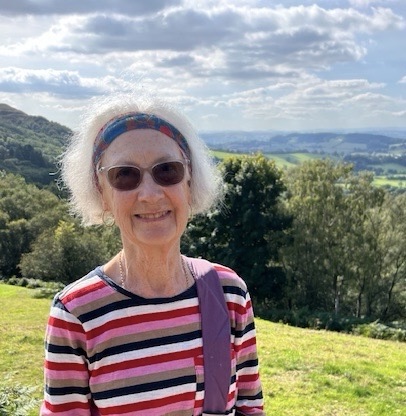
In September I spent two weeks in England, based in London and travelling round the country by train to see friends and family and favourite places. The photo below was taken on the Malvern Hills.

Since returning home there has been sadness with the deaths of three long-standing friends and colleagues, and stress with tenancy issues currently before the court. But on the whole life continues in a pleasant quiet routine, recently enlivened by the visit of Brian’s son, daughter and granddaughter from England. I keep reasonably fit with weekly TRX and Zumba classes, swimming in the warmer months, and daily walks with friends or one of my two “dog shares”, Ireland the Labrador and Buddy the Cavoodle.

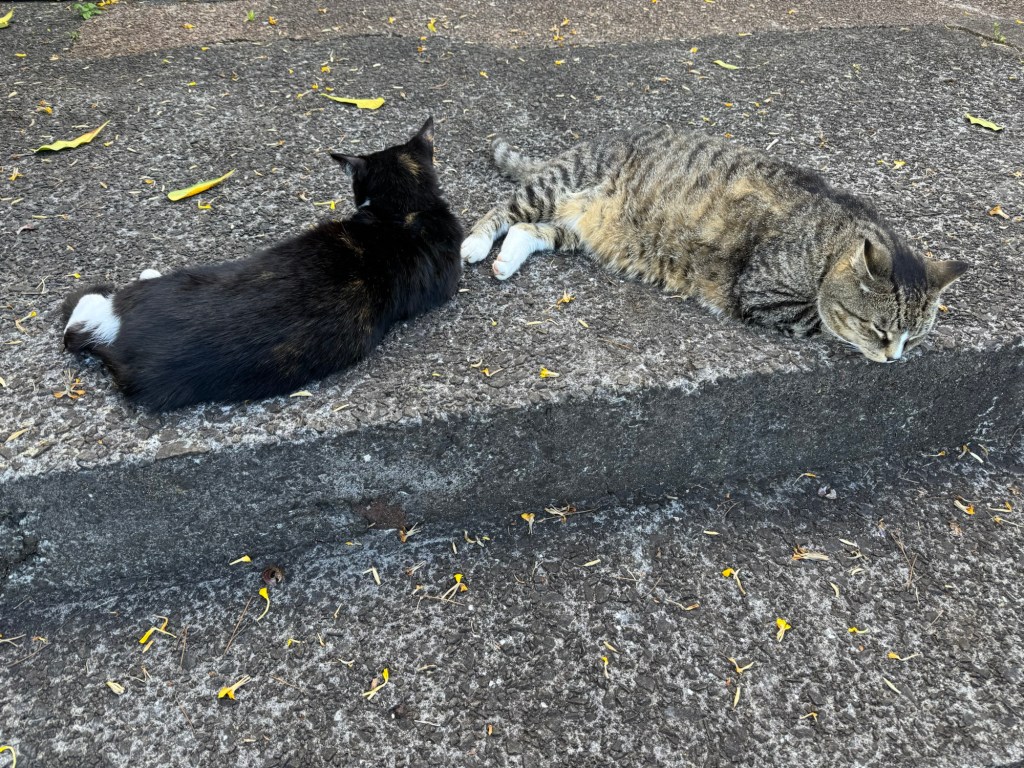
Our two cats, Magic and Leo, are now ten years old and still in good health. Now that the New Zealand summer has arrived they spend a lot of time resting in the sun.

Happy Christmas and New Year, and thank you for reading my blog.

Revisiting my NZ/UK Trilogy

Except for those outstanding ones that acquire classic status, most modern novels lapse into obscurity within a few months of publication. This is a pity because they might well remain readable for years to come. The huge number of new books being released every day is one reason for declining sales. Another is a lack of ongoing marketing and, in common with many other authors, I feel uncomfortable with self-promotion. But there are times when it has to be done, so this post is about the revival of some of my earlier work.

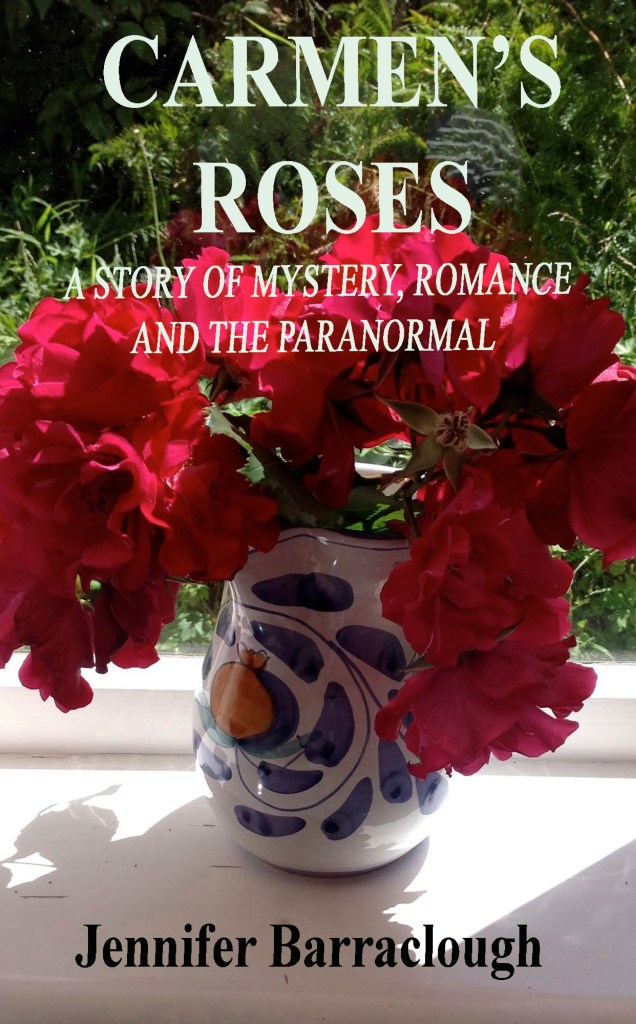
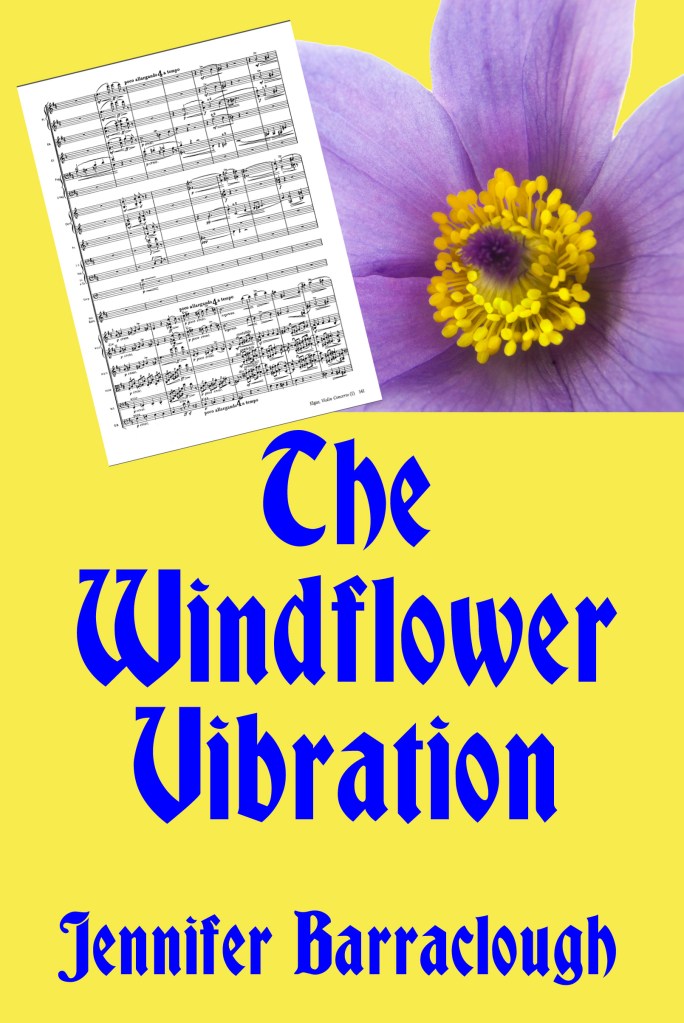
Ten years have passed since I began my self-publishing career through Amazon kdp, with a short novel called Carmen’s Roses. Encouraged by its success I went on to write two sequels, Blue Moon for Bombers and The Windflower Vibration, published separately and then as a combined set called Three Novellas. To mark their 10th anniversary, and in the hope of reaching a wider readership, I am now reissuing them as low cost e-books on multiple channels through the Draft2Digital platform.

The first book Carmen’s Roses is set in Devonport, the Auckland suburb where I live. It is a story of mystery and romance which touches on some deeper themes. The narrator, Iris, is leaving the English winter to take a holiday in the New Zealand sunshine, with the intention of completing her recovery from a serious illness and making amends for a shameful episode in her past. But the shock of a sudden death, the shadow of an old love affair, and the onset of ominous new symptoms threaten to destroy her hopes of happiness and healing. The book, described by one reader as an “Interwoven tale of love, mystery and more than a touch of the paranormal'” received 5-star reviews on Amazon, for example “Jennifer draws believably on her medical background and in this story weaves a very tangled web indeed”.

The second book, Blue Moon for Bombers, is set in England in 2007, when an old man in his hospital bed is haunted by memories of serving with Bomber Command in World War Two. Meanwhile back in his country home, the continuing fallout from his wartime trauma leads to rising tension among the two younger couples who are marooned indoors by the summer floods. With testimony from an unexpected visitor, and some guidance from the spirit world, the family’s secrets are revealed and the emotional wounds begin to heal. Again, the reviews were positive: “Excellent strong plot … like a Victorian novel set in modern times” “Brilliant ending”.

Thirdly The Windflower Vibration, with action split between Takapuna in New Zealand and Malvern in England, continues and weaves together the stories from the first two books. A man dies while swimming off an Auckland beach, and a woman who witnesses the event becomes involved in its aftermath. Was the death due to natural causes hastened by medical malpractice? Or was it one strand in a complex web spread over two hemispheres and two centuries? Although I think this book is equal in standard to the previous ones it gained less attention, perhaps because it deals with characters in later life – just one 5 star rating, no reviews.

Rereading my three novellas recently I felt they deserved a new lease of life. So if you haven’t seen them before, please have a look at these ebooks, and some of my others, through this link. There are print versions on Amazon too.

Memories of England in pictures

Twenty-four years after moving to New Zealand, I am very fortunate to still have many friends and relatives in England and still be able to go back and see them. A consecutive Britrail pass provides the freedom to travel around the country on any train at any time, to visit people and places that played an important part in my earlier life and to take some pictures to remember them by.

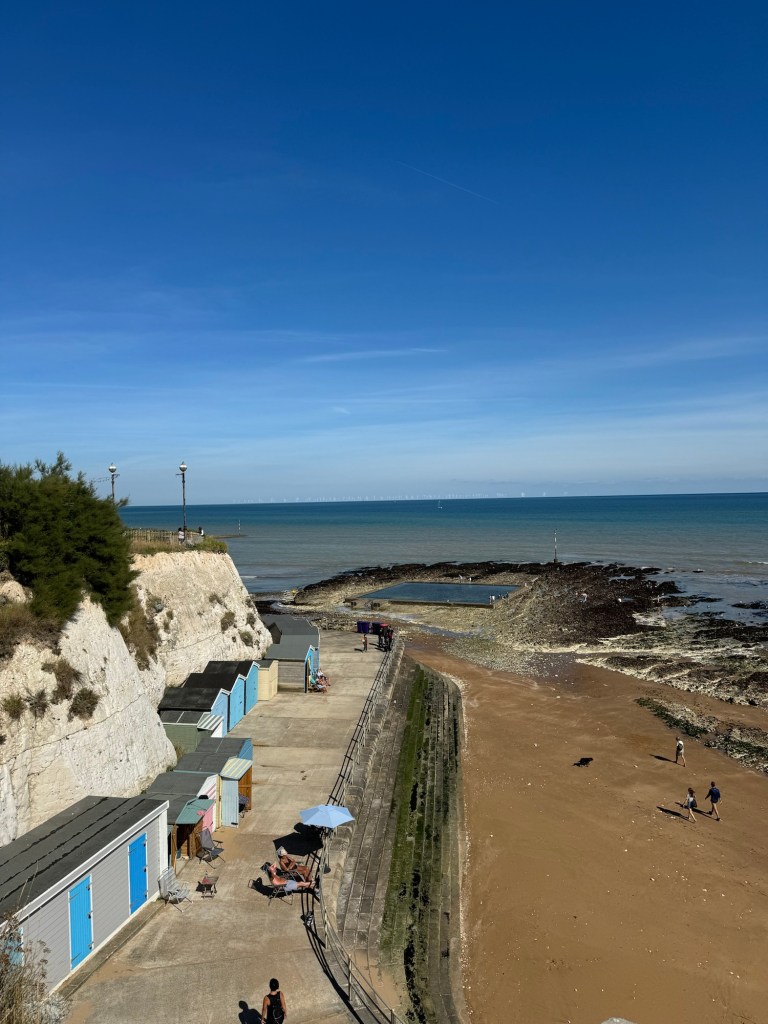
My mother was brought up in Ramsgate and Margate, and during my own childhood we often visited these and other seaside towns in Kent.

Broadstairs in the sunshine
Folkestone harbour on a dull day

My own childhood was spent in Gravesend. Returning there recently I found the town so changed that I hardly recognised it, and didn’t take any photos other than one of the house where I grew up.

Our old family home on The Overcliff

Besides the outings to the seaside we often visited other parts of Kent.

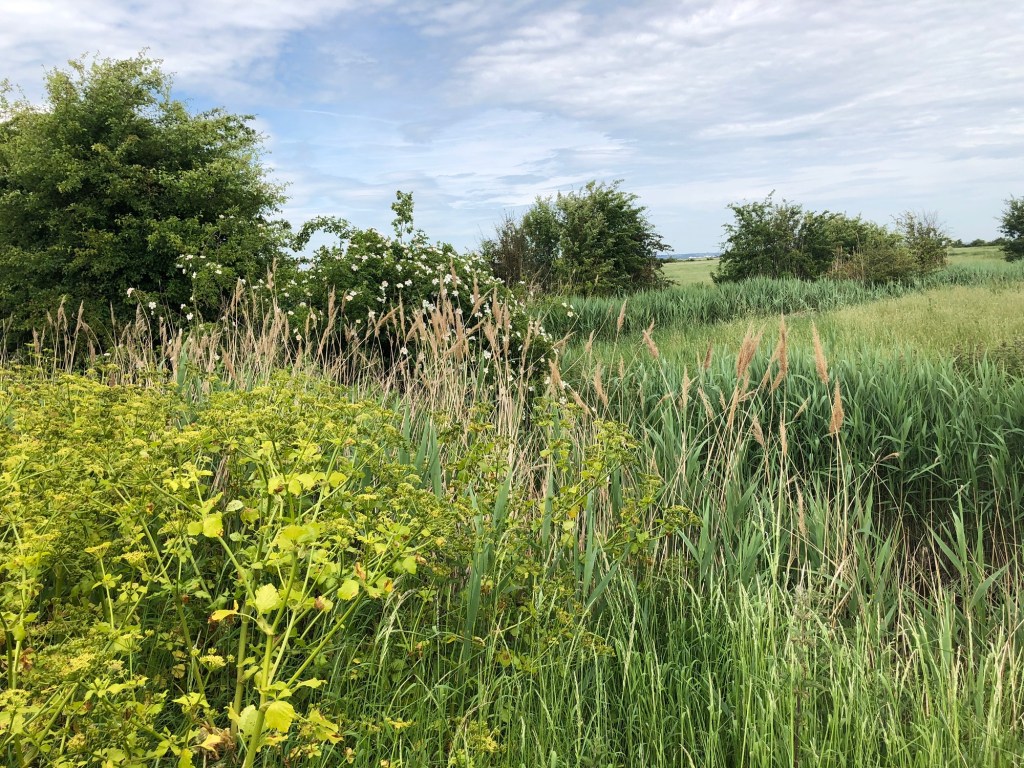
North Kent marshes – where I set one of my novels
Cutty Sark – now in Greenwich but was lying on the Greenhithe shore during my childhood

My teenage years were spent in Yorkshire. I don’t often go back there now, but I took this picture during a delightful stay with an old school friend who lives in Wharfedale.

A stream near Leathley

Oxford, where I attended medical school and spent most of my subsequent career, still feels like home. The city centre has deteriorated but walking by the river is lovely as ever.

River Thames in Grandpont Nature Park

And a favourite place full of memories – the College of Healing course, the Elgar museum, the walks on the hills – is Great Malvern.

The Malvern Hills – I think this one is called the Sugarloaf
Walking on the Malvern Hills

A highlight of my time in London was a lunch party for 24 of the friends who have given me hospitality over the years.

One of three tables set for lunch

As we all get older, and the state of the world gets more precarious, I know I may not see some of these people and places again. But I hope there will be more visits to England still to come.

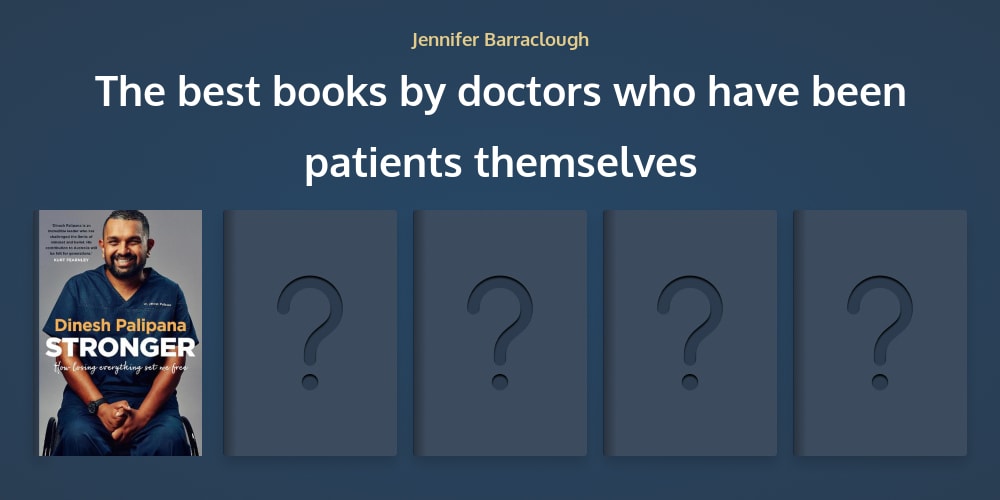
The best books by doctors who have been patients themselves

The website Shepherd.com offers readers a new way to discover books that may interest them. Each page describes one book by a contributing author, and five others on a related theme. I was invited to create a page on a theme of my choice, and having just published a memoir about my own migraine, I decided to look for books written by other doctors who had been patients themselves. I was less interested in the medical details than in the way the illness experience had shaped their personal and professional lives. I came up with a varied list of recommendations.

Doctors can face particular challenges when they become patients. The change of status may seem humiliating, as poignantly described in the saddest book on my list, by an eminent surgeon who felt himself reduced to “Just another old man with prostate cancer”. On the positive side, doctors who are still working may well become better clinicians especially as regards communication with patients and relatives. This comes through in a collection of vignettes about the everyday clinical work of a doctor with a long history of ulcerative colitis. A memoir by a medical student who was rendered quadriplegic in a car accident, but went on to qualify and build a successful career, is an inspiring read showing what determination can achieve. My two most unusual book choices are by doctors whose illness experience proved a catalyst for a move away from orthodox medicine towards alternative fields with a spiritual focus.

To see details of my list please click on the image below, or visit this page.

,

Books I’ve enjoyed #13

The current interest in issues of gender identity prompted me to read Radclyffe Hall’s autobiographical novel The Well of Loneliness, which was banned after its publication in 1928 but is now regarded as a classic. It is about a girl born in the late Victorian era to a wealthy family living on a country estate near Malvern. Despite being biologically female, ever since early childhood her appearance and behaviour has been obviously masculine. Although her parents feel greatly puzzled and concerned by her condition they never speak of it. When she grows up and falls passionately in love with another woman, her mother is forced to acknowledge her nature, and rejects her as “a sin against creation”. During later life in London and Paris she achieves success as a novelist and forms a loving relationship with a younger woman, but is eventually unable to withstand society’s condemnation of “inverts”. Nowadays her condition would be more widely accepted and she would be a candidate for sex reassignment surgery. This sad book contains sensitive descriptions of the main character’s tribulations, and of English country life as it used to be.

I listened to the audiobook version of Prince Harry’s memoir Spare. It is well written (by a ghost writer) and Harry narrates it fluently, He comes over as a fun loving but often troubled man whose most positive experiences have been his army service, his charity work with wounded veterans, and falling in love with Meghan. Although the text contains plenty of interesting material, it is pervaded by the author’s sense of victimhood, entitlement, hatred of the press and resentment towards the royal family. I feel these attitudes can only partly be justified by the trauma of losing his mother when he was eleven years old, terrible though that must have been. We await the next episodes of his life story.

Clare Chamber’s novel Small Pleasures is set in the suburbs of London during the 1950s. Jean is a middle-aged unmarried woman who works as a journalist on a local newspaper and lives with her demanding elderly mother. Her drab existence is enlivened after she begins research for a feature about a young girl who is allegedly the product of a virgin birth. The details of Jean’s domestic life, and the development of her character as she becomes emotionally involved with the girl and her parents, are engagingly described in a style reminiscent of Elizabeth Taylor or Barbara Pym. It must have been difficult to devise a satisfactory ending to the story and the last few chapters are not up to the standard of the earlier ones. Despite this criticism I very much enjoyed the book.

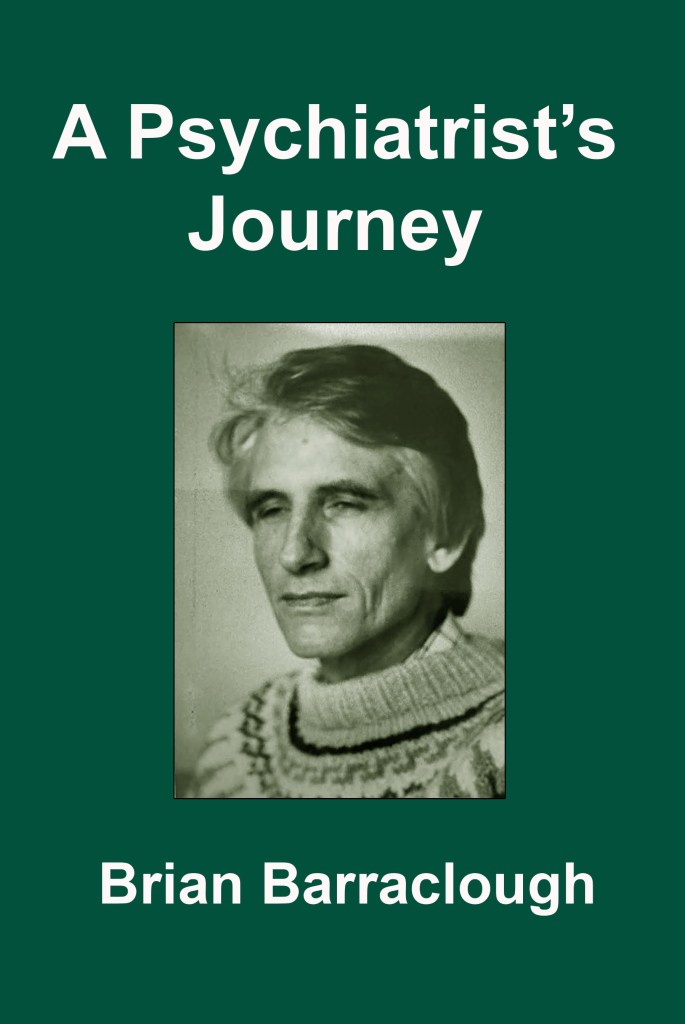
Brian Barraclough 1933-2025

My beloved husband Brian died from respiratory failure last week.

He was 92 years old and in recent months had endured a gruelling decline of both body and mind, due to cardiac and cerebrovascular disease. He was ready to leave this world and while it is a blessing that his suffering is over, his death is a great loss for me. During the 47 years we were together my role had gradually evolved through different stages – mistress, wife, nurse and now widow. Of course there were challenges, but not too many. We had a wonderful marriage.

There is much else to be thankful for. Brian had excellent care from the staff of North Shore Hospital in Auckland. I am receiving a huge amount of support, especially from Brian’s three nieces, and from friends and relatives in both New Zealand and the UK. My cats are being especially affectionate at night.

We will have a small private funeral service, then I expect there will be a difficult few months ahead, sorting out Brian’s affairs and possessions, adjusting to life without him, and doing my best to develop a happy future for myself.

Brian had not quite finished writing his extended autobiography. Due to his incredibly vivid and detailed memory, the document contains a lot of valuable information not only about his own life but about the history of psychiatry in both NZ and the UK. I aim to complete the editing process and publish it next year.

Hospital days

My husband Brian is in hospital. Over recent months he’s been developing a complex, fluctuating mix of physical and mental symptoms. He has been very ill and spent about two weeks on a medical ward before being transferred to a unit for older people, where he is improving, and benefiting from activities – both of us took part in a bowling match (!) and have taken trips to the beach.

My days have taken on a new pattern – in between spending long hours with Brian at the hospital dealing with the house and garden, the cats, my own healthcare appointments, responding to emails and texts. I’ve continued my exercise classes and choir practice, but otherwise am not doing much. There’s no time for socialising and I lack the concentration for any serious reading, writing or other constructive activity. But I am coping better than I did during the similar stressful period ten years ago when Brian had major cardiac surgery and I developed a range of stress-related problems (I described that experience on this blog and in a short book).

We hear a lot of complaints about New Zealand’s hospitals in the media, but Brian has had excellent treatment. The kindness and patience of the staff, including especially the health care assistants, has been wonderful. I hope Brian will be well enough to come back home soon, so we can pick up the threads of our previous life, and it will be important to complete and publish his new book about his long medical career.

Novels about the psychology of marriage

Here’s my list of “The best novels about the psychology of marriage” on Shepherd.com. It includes five books on a theme loosely related to that of my own new novel. Most of the plots involve some kind of marital conflict, or touch on the related topics of adultery, widowhood and divorce, but have (reasonably) happy endings.

This is the third list I’ve published with Shepherd. The process of compiling them encourages me to read more widely and reflectively, as well as providing a stress-free method of publicising my own books.

I dislike promoting my own work. I sometimes feel physically sick when writing emails to friends and acquaintances to tell them about my latest book. I’ve had little success with paid adverts and promotions in the past, so I don’t do them any more. When I was younger I enjoyed giving talks, even to large audiences, but not any more. All the same, with around three million books now being published each year in the US alone, indie authors like myself have to do some marketing if they are going to achieve more than a handful of sales.

So, in the hope that you’ll have a look at No Good Deed, here is a comment emailed to me by one reader:

“My goodness your new book is incredibly powerful, backed up by strong writing. I couldn’t put it down and it affected me emotionally as well … I thought the climax was stunning.”

No Good Deed is available in print and ebook versions from major online retailers through this link.

Music, spirituality and religion

Is a strong Christian faith essential for writing, performing or appreciating sacred church music? And how much does the music contribute to the spiritual experience of a church service?

I’ve been thinking about these questions since a recent visit to the cathedral which I used to attend regularly as a member of the choir. We sang mainly traditional classical pieces in four voice parts with organ accompaniment. On the day I returned, the organ was not being played and “my” old choir had been replaced by a youth group singing loud upbeat music. They were obviously well trained and enthusiastic and I expect many members of the congregation liked their modern style. But I found the sound more intrusive than uplifting. This confirmed that, for me, music is a vital part of a service.

The British composer John Rutter (born in 1945) would probably agree about this. He has spoken and written in some detail about his attitudes to religion and spirituality. He describes himself as an agnostic, who values the traditions of the Church of England but does not accept all of its doctrines. In one interview he spoke of understanding the universe in terms of a lottery governed by mathematics, rather than by an all-powerful deity. He said he believed in a more general sense of spirituality which can be accessed through the beauty of nature or art as well as through music.

I was curious to find out something about the beliefs of other men (they have all been men) whose choral sacred music I have enjoyed singing. According to the information I found online, some of the greatest classical composers – Bach, Mozart, Handel, Haydn – were devout practising Christians. In contrast, there were others who had been brought up in the Christian faith but had doubts in later life, leading them to explore wider concepts of spirituality. Beethoven was one of these, and more recent examples include Berlioz, Faure, Elgar and Vaughan Williams.

Whether or not they held a conventional religious faith, it seems that many of these men believed in an intangible realm beyond the material world as being the source of music. Having the ability to access this source is a wonderful gift, though inspiration is not enough on its own. The process of composing works that can be performed by other people requires a thorough knowledge of the technicalities of music, and a great deal of hard work.

A few quotes:

Beethoven: Music is the mediator between the spiritual and the sensual life.

Bach: I play the notes as they are written, but it is God who makes the music.

Vaughan Williams: There is no reason why an atheist could not write a good Mass.

Elgar: My idea is that there is music in the air, music all around us; the world is full of it, and you simply take as much as you require.

Haydn: When I think of my God, my heart dances within me for joy, and then my music has to dance too.

P.S. Since drafting this post I have visited London and heard glorious singing during a Latin Mass at St James, Spanish Place.

Image from WordPress Free Photo Library

Chartwell and Biggin Hill

While in England this summer I visited Chartwell, the home of Winston Churchill and his wife Clementine. I had wanted to go there for years but the house, situated deep in the Kent countryside, seemed too difficult to access without a car. Then I discovered that a bus from South Bromley goes there on Sundays.

Chartwell: Photo by Charlie Seaman on Unsplash

The house contains many displays of Churchill memorabilia, and is furnished in a simple but elegant style reflecting Clementine’s taste. I especially liked her bedroom, painted in her favourite shade of duck-egg blue. Winston’s bedroom was not open to the public.

Lady Churchill’s room: Photo from National Trust
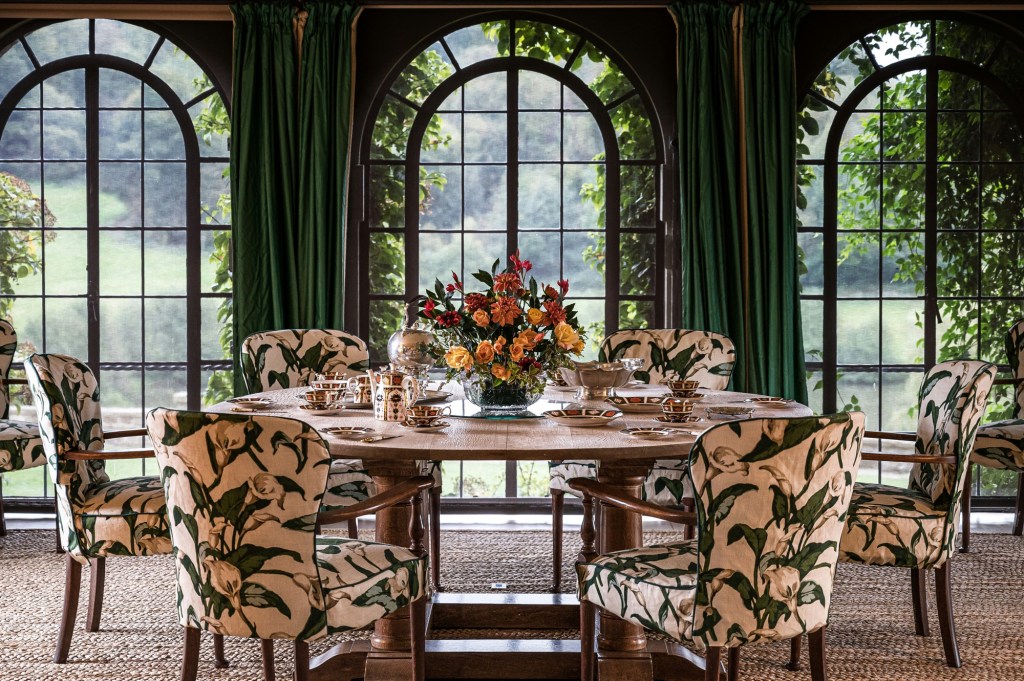
Dining room: Photo by Jez Timms on Unsplash

The extensive grounds include walled flower and vegetable gardens, ponds and woodlands. I didn’t find Churchill’s painting studio, but had seen many of his art works inside the house. Nor did I see Jock, the latest of the marmalade cats that have always been kept at Chartwell. All the same it was a very worthwhile visit.

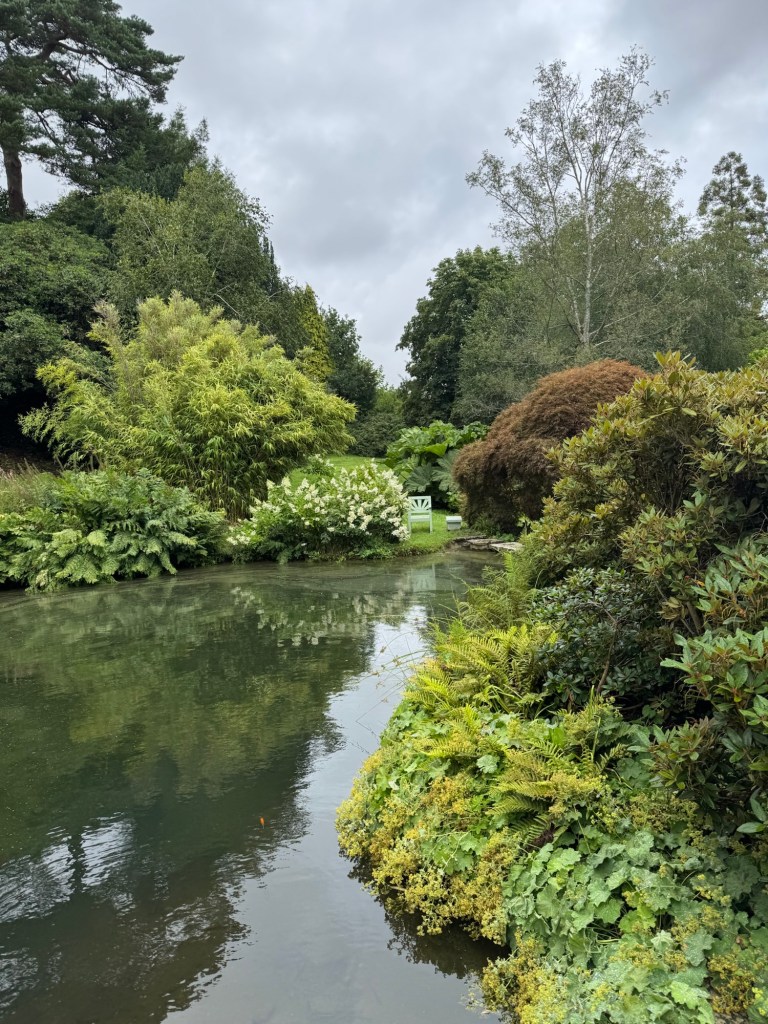
One of the ponds at Chartwell

Another place I’ve long wanted to see is the RAF museum at Biggin Hill, so it was a very nice surprise to find that the bus route went past it. I went in and was shown round the beautifully kept memorial chapel dedicated to the airmen who lost their lives in WW2. There was a separate display honouring the women who served as ferry pilots and in numerous ground roles.

From an adjacent site, it is possible (for a hefty price tag) to take a flight in a Spitfire. This is something else I’d love to do. Maybe next year …

Spitfire at Biggin Hill

My new novel

I’m pleased to announce the publication of my latest short novel No Good Deed.

“Charlotte and Henry’s quiet retirement is upended when a medical school reunion forces Charlotte to confront a long-buried trauma. Her search for closure takes a sinister turn, and meanwhile Henry’s heart condition is getting worse. A tragicomic tale with a chilling final twist.”

The old saying “No good deed goes unpunished” gave me the idea for this book, and the storyline evolved gradually over a year or two. Although it’s not directly autobiographical it draws on my experience as a medical student, practising doctor, patient, patient’s wife – and life coach. It touches on some serious themes but has humerous aspects too.

No Good Deed is available in ebook or print formats from multiple online retailers. Please have a look: https://books2read.com/u/b5Exvk.

The art of the blog

My husband sometimes asks me why I write a blog. I usually reply “Because I like doing it”, which probably is the main reason but not the only one. For myself, it is a way of widening my knowledge and views about different subjects, and providing a record of significant events and aspects of my life. For readers, I hope it provides some information and entertainment. I’ve had many interesting comments, with no unpleasant ones so far, and made a few online friendships with people from around the world – a modern equivalent of “penpals”.

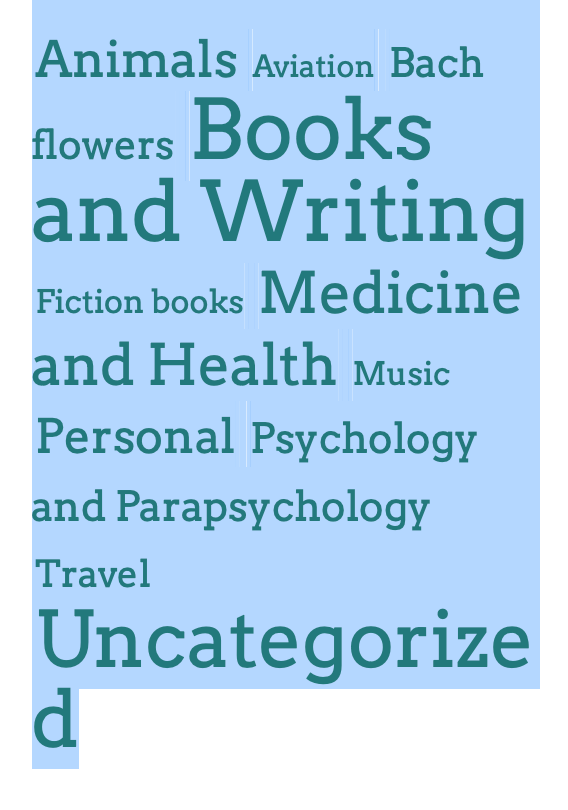
I started with Google Blogger many years ago, then changed to WordPress where I have published almost 300 posts. At one time I ran four separate blogs on specific subjects, but this system proved too cumbersome to manage so I put them together and my “category cloud” now includes a wide range:

I don’t have a huge readership but am satisfied with several hundred followers from different platforms, and a handful of visits every day always including archived posts, those about Bach flowers being most popular.

I only post when I have a new idea to write about, which is seldom more than once a month. Ideally I would like to post once a week, provided that I could come up with worthwhile content rather than cluttering up the internet with boring trivia or embarrassing personal details. Some of the people whose blogs I follow maintain a much more regular and frequent schedule, and I admire them. For example a new post from The Cricket Pages, by Rachel, arrives in my inbox at the same time every Sunday without fail. And The Mindful Migraine, by Linda, posted every single weekday for its first year and now three times a week. Both these blogs are always worth reading.

Writing the blurb for a new novel

Writing a book – in my opinion – is much easier than marketing it. As stated in an article on Draft2Digital, crafting the blurb requires a switch from “author” mode to “copywriter” mode, which may not come naturally. Their recommended structure for a fiction blurb begins with a “hook”, and ends with “social proof” such as excerpts from reviews.

My own forthcoming novel No Good Deed is not directly autobiographical, but in keeping with the advice to “write about what you know” it draws on my own experiences ranging from sexual harassment at medical school, my husband’s heart attack, and on a lighter note life coaching and cookery. I’m currently working on the blurb, and here is a draft version. Any suggestions about how to make it more compelling would be welcome. I haven’t (yet) sought help from ChatGPT.

Marriage. Memories. Medicine. Poison.
Charlotte and Henry, a married couple in their sixties, live a comfortable but monotonous life somewhere in the English midlands. Henry recently retired from his post as a consultant pathologist at the local hospital. Charlotte once hoped for a medical career of her own, but following an experience of abuse during her student days she had a “nervous breakdown” and did not complete the course. She now combines being a homemaker with doing good works in the local community, although her efforts tend to misfire. She has recently started seeing a life coach who is encouraging her to be more assertive. When Henry insists that she accompanies him to a medical school reunion she attempts to confront her abuser, with sinister consequences. This tragicomic story ends with a dark twist.

From Amazon reviews of Jennifer’s earlier novels:

You Yet Shall Die: I found the book both intriguing and unusual. I could hardly wait for the story to unfold as family secrets, crime and murder came to light – the ending was totally unexpected. An absorbing read. 


Cardamine: This is a gripping mystery which keeps you guessing until the end, with twists and turns up to the last page.

Three Novellas: Jennifer brings together all her experiences from previous work to produce a superb trilogy finishing with an interesting twist.

Photo by Debby Hudson on Unsplash

The Elgars in the Alps

Edward and Alice Elgar 1891

I’m now singing with the Harbour Voices choir on Auckland’s North Shore. Our next concert will include some songs from one of Edward Elgar’s lesser-known works, From the Bavarian Highlands (Op 27). 

I’ve always loved Elgar’s music. In the long-ago days when I was a young single woman with an old-fashioned record player for company in the evenings, I repeatedly listened to the Cello Concerto, Enigma Variations, and the Pomp and Circumstance March No 1 better known as Land of Hope and Glory.

My interest in Elgar grew when I started visiting Malvern many years later. He was born in 1857 into a musical family living in the nearby village of Lower Broadheath. Their modest house is now a small National Trust museum called The Firs.

Elgar’s birthplace

Elgar loved walking on the Malvern Hills, as I do, and perhaps it was the proximity of Alpine walks that led him and his wife Alice to spend a holiday in Garmisch, Upper Bavaria in 1894. 


Garmisch

Inspired by the lilting melodies of the folk songs and dances from the surrounding mountainous regions, the Elgars composed From the Bavarian Highlands between them. Edward wrote the music, in the form of songs for SATB voices with a piano accompaniment, and Alice wrote the lyrics. The Dance, with its tuneful joyful rhythms, is followed by the wistful False Love, the soothing Lullaby, and the gently spiritual Aspiration.

For any local readers of my blog who would like to attend the concert, here is the poster with the details.